
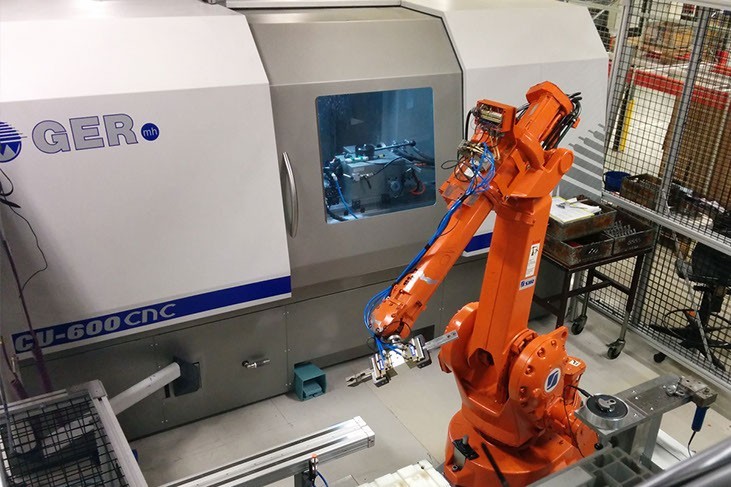
In precision manufacturing, surface finish and tight tolerances are everything. Whether you’re shaping aerospace parts, automotive components, or medical devices, the way your parts are finished can make or break the final product. That’s where automated grinding comes in.
Modern CNC shops are moving away from manual processes and turning to advanced grinding automation to boost consistency, reduce human error, and increase throughput. But choosing the right solution isn’t just about buying the latest machine; it’s about ensuring your investment integrates seamlessly into your workflow and supports long-term reliability.
Here are the essential features to consider before investing in automated grinding solutions for industrial applications.
1. Precision and Repeatability
Every part off your line should meet the same spec, that’s the promise of automation.
Look for:
- Micron-level accuracy in finish tolerances
- Closed-loop feedback controls
- Servo-driven movement for consistent results
Repeatability is critical in high-volume production. A well-designed automated grinding solution ensures accuracy across hundreds or even thousands of parts without deviation.
2. Flexible Integration with CNC and Robotics
Your grinding automation should connect smoothly with existing CNC cells and robotic systems.
Look for:
- Modular designs that integrate with multi-axis CNC machines
- Simple I/O interfaces for robotic arms
- Real-time data sharing across connected systems
A connected production line reduces post-processing steps, improves efficiency, and enhances automation readiness.
3. Smart Tool and Wheel Management
Grinding performance is only as strong as the wheel condition. Automation ensures consistency.
Look for:
- In-process tool wear sensors
- Automatic wheel dressing tools
- Wheel usage tracking and alerts
With intelligent monitoring, you extend wheel life, minimize downtime, and maintain surface quality without frequent operator intervention.
4. Advanced Automation & Controls
Automated grinding isn’t just about replacing manual labor—it’s about working smarter.
Look for:
- Intuitive touchscreen interfaces
- PLC or CNC-based controls with custom programming
- Auto-loaders and conveyors for hands-free handling
- Real-time alerts, diagnostic data, and remote monitoring
These features make grinding automation more adaptive and operator-friendly while supporting Industry 4.0 initiatives.
5. Compact Design with Industrial Power
In many shops, floor space is limited. But grinding performance can’t be compromised.
Look for:
- Machines with compact footprints and vertical orientation
- High-speed spindles with robust torque
- Efficient coolant and chip management systems
Compact automated grinding units should still deliver high-volume, industrial-grade throughput.
6. Safety and Operator Ergonomics
Automation improves productivity, but safety must remain a priority.
Look for:
- Guarding systems and interlocks are built into the design
- Minimal manual intervention during setup and operation
- Clean enclosure layouts for easy maintenance
These ensure operator protection while reducing training time and potential risks.
Conclusion
Choosing the right automated grinding solution is not just about machine specs; it’s about how well it supports your operations, integrates with your existing workflow, and scales with your future production needs.
At Precision-Tec, we specialize in advanced, shop-ready automated grinding solutions that deliver speed, consistency, and efficiency. From robotic integration to high-precision finishing, our systems are designed to help manufacturers achieve tight tolerances at scale. Contact us today to explore more.
Frequently Asked Questions
- Why choose automated grinding over manual grinding?
Automated grinding offers higher consistency, tighter tolerances, and reduced labor dependency. It also minimizes human error and boosts production speed, making it ideal for high-volume manufacturing.
- What types of parts benefit most from automated grinding?
Parts requiring flat, parallel, or highly precise surfaces—such as gears, spacers, aerospace components, and medical tools—see the biggest advantages. Automation ensures consistent finishes even on complex shapes.
- Can automated grinders integrate with CNC and robotic systems?
Yes. Advanced grinding units are designed for seamless integration with CNC machines and robotic cells. They feature modular designs, I/O connectivity, and real-time data sharing to streamline workflow.
- How does tool and wheel monitoring improve grinding performance?
Smart monitoring systems track wheel wear and perform automatic dressing. This ensures the wheel stays in optimal condition, reduces scrap, and guarantees consistent quality across batches.
- Are compact automated grinding systems powerful enough for industrial use?
Absolutely. Today’s compact solutions are engineered with powerful spindles, efficient chip handling, and rugged construction, ideal for shops with limited space but demanding output needs.